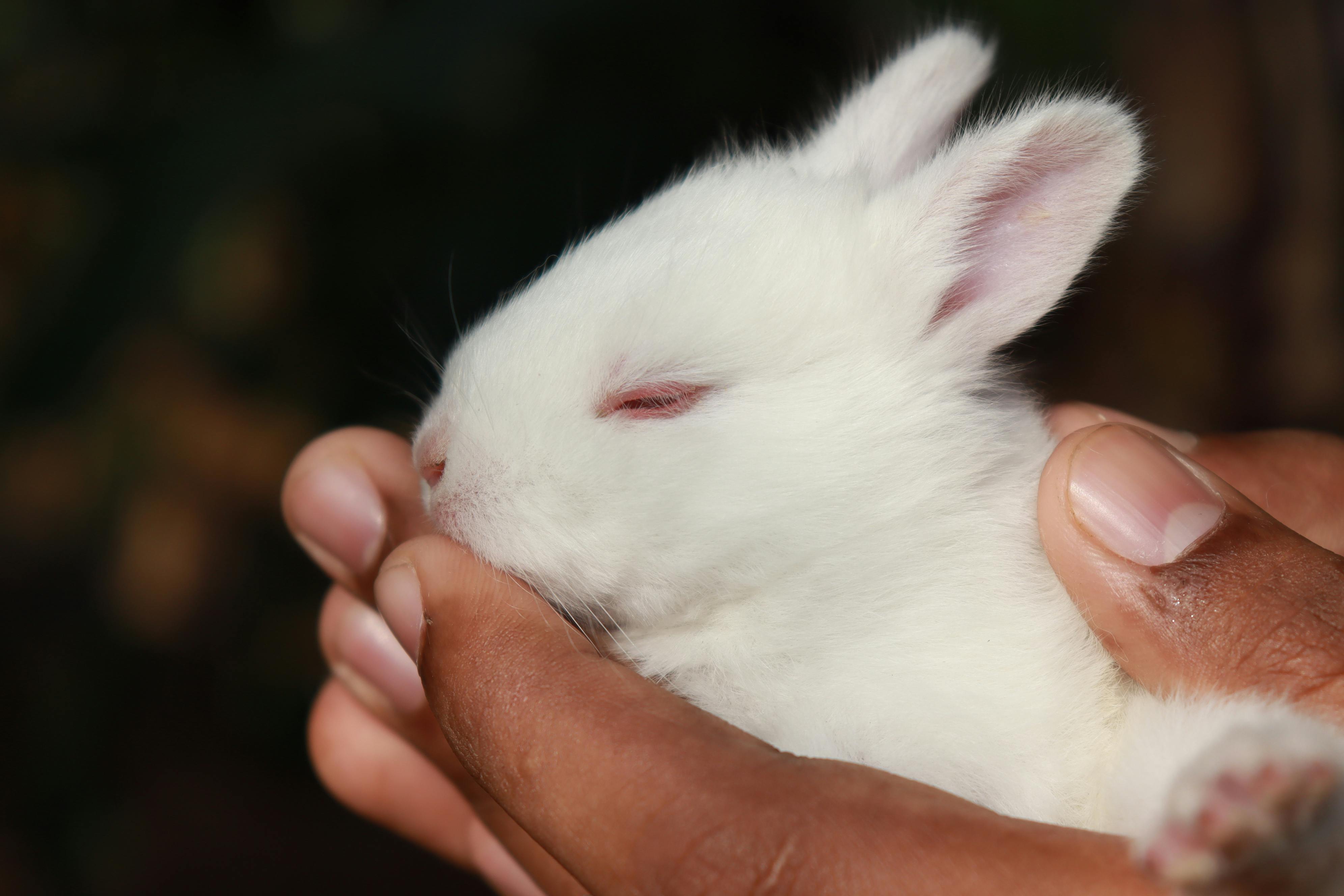
Would you use cosmetics made from rabbit tears?
The shampoo on the supermarket shelf, the skin lotion we apply daily, and the pill we mindlessly swallow when we have a headache. Behind all these conveniences and health benefits we enjoy in our daily lives, someone's silent sacrifice is hidden. It's the millions of animals locked in cages in laboratories, forced to endure needles and chemicals their entire lives.
Recently, there has been a significant increase in consumers opening their wallets after seeing the Cruelty-Free mark (a symbol depicting a rabbit hopping around) on the back of a product. As voices valuing the sanctity of life grow louder, legislation banning animal testing for cosmetics is being passed worldwide, led by the European Union (EU). However, when it comes to the medical field, which requires developing new drugs and treating incurable diseases, the problem is not so simple. Faced with the immense goal of extending human life, is animal testing truly an unavoidable "necessary evil" or a "selfish violence" that must be stopped immediately? Today, GOLA explores this weighty dilemma, where bioethics and scientific advancement collide head-on.
Why Animal Testing Can't Be Stopped (Argument from the Pro-Continuation Side)
1. Human life is the top priority.
The argument in favor of animal testing is clear and realistic. The human body is a complex system, more complex than the universe itself, with trillions of cells intertwined. When developing a new anticancer drug or vaccine, it's impossible to predict with 100% certainty what fatal side effects it will cause in the human liver, heart, or brain using computer simulations or a few cultured cells. Since direct in vivo testing on humans is impossible, verifying safety using animals most genetically similar to humans—such as mice, primates, and dogs—is the only viable alternative, given current scientific and technological capabilities.
2. The dazzling achievements of modern medicine that we enjoy
From penicillin, which saved humanity from countless infectious diseases, to insulin, a lifeline for diabetics, and even the COVID-19 vaccine that recently terrified the world—the dazzling medical achievements we enjoy today, as we look toward the age of centenarians, were all founded on animal testing. Had animal testing been banned entirely in the past, simply for the sake of animal ethics, we might still be living in a horrific era where millions die from even minor infectious diseases. Those in favor argue that while legal regulations should be strengthened to minimize the sacrifice of laboratory animals (such as the use of anesthesia), banning testing altogether amounts to abandoning human health.
Animal testing must stop immediately (argument for ban)
1. Violence against life and ethical issues
Those advocating for a ban strongly argue that animals, too, are living beings capable of experiencing pain and fear. They argue that humans have no right to confine them in cramped cages, inject chemicals into their eyes, or mutilate their organs simply because they cannot speak. This is utterly anthropocentric arrogance and nothing more than violence against the vulnerable. They pose the profound question, "If we justify the horrific suffering of other living beings simply because it benefits humans, is that truly an ethical society?"
2. Animals and Humans Are Different: The Fatal Uncertainty of Experiments
Even more surprising scientific counterarguments exist. A prime example is the thalidomide incident, where a new drug that had no side effects in rats or dogs caused horrific malformations in humans. While rats and humans share similar genes, they are distinct species. Statistics prove this point: over 90% of new drug candidates that succeed in animal testing ultimately fail in human clinical trials. Those opposing the ban argue that more funding should be invested in far more accurate and ethical alternative technologies, such as organ-on-a-chip, which replicates the movement of organs by culturing human cells on a chip, or advanced AI computer simulations.
Until the perfect answer comes, the attitude we should have
Watching this debate weighs heavily on my heart. Human health and bioethics are absolute values that cannot be lightly abandoned. Currently, the scientific community is striving to alleviate this dilemma by adhering to the so-called "3R principle." This pledge is to minimize the number of laboratory animals (Reduction), minimize suffering when unavoidable (Refinement), and ultimately develop technologies to replace animal testing (Replacement).
However, until the day comes when technology completely replaces animal testing, we, as consumers, must continue to ponder. The first step toward change is to consider the weight of life hidden behind the products we use without thinking, and to consistently encourage companies and governments to invest in the development of alternative technologies. GOLA users, where do you stand? We encourage you to freely share your honest opinions, rich in your philosophy and values, in the discussion forum. Let's exchange opinions with other users and gather warm wisdom to resolve this cold laboratory dilemma.